Fascinating Facts About the Human Iris
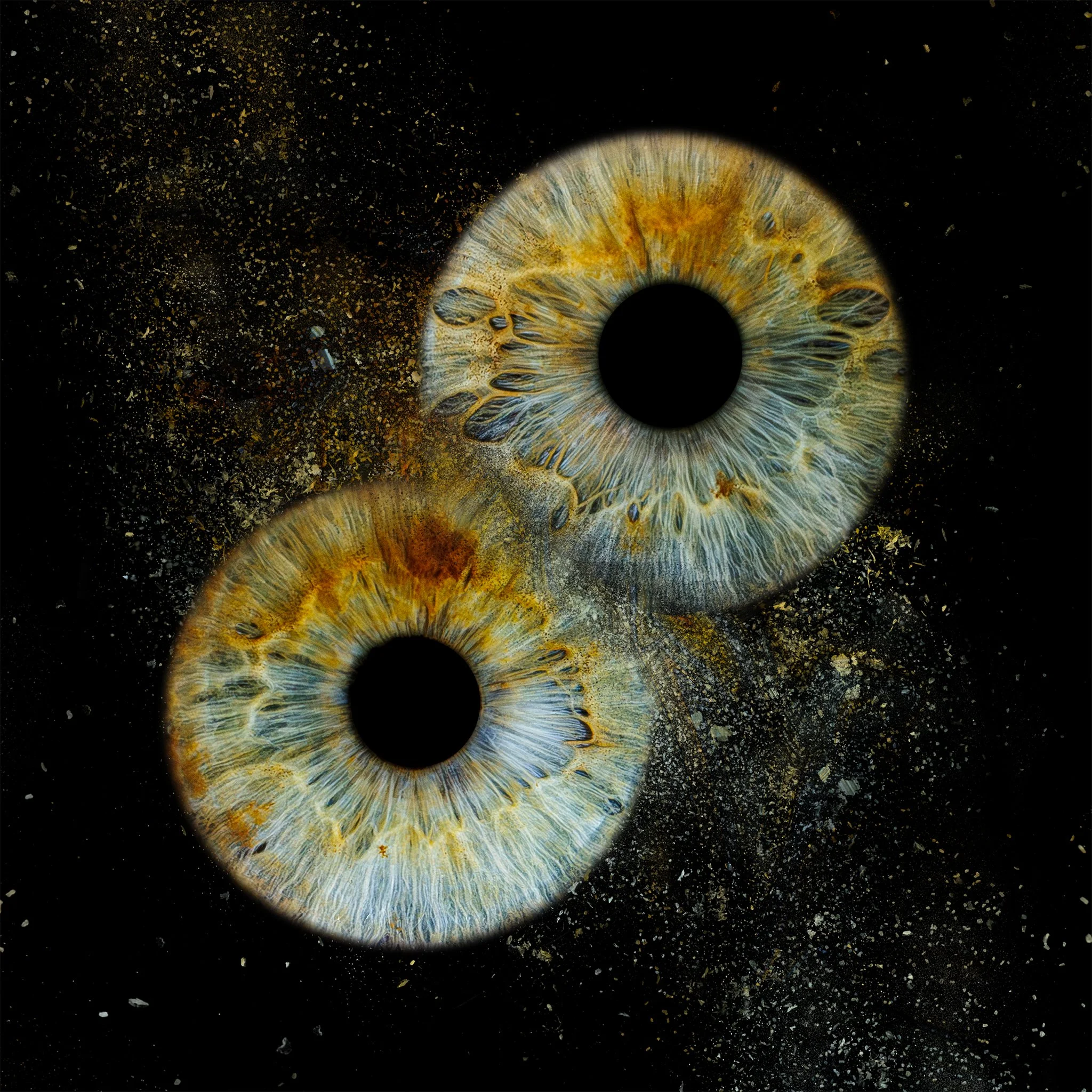
-
No two irises are alike - not even in identical twins. Each has a distinct pattern of fibers, colors, and textures, making iris recognition a highly accurate biometric method.
-
Iris patterns begin forming around the third month of gestation and continue to develop through early life, shaped by both genetics and random biological processes.
-
Melanin density determines iris color. All human irises contain melanin — eumelanin (dark brown/black) and pheomelanin (reddish-yellow).
Dark brown eyes: High melanin in the iris stroma (front layer) absorbs most light, producing deep color.
Blue eyes: Very low melanin; light scatters off collagen fibers, with shorter blue wavelengths reflecting more - no blue pigment exists.
Green/hazel eyes: Moderate melanin plus scattering; yellow pheomelanin mixes with scattered blue light for green, while hazel often shows a brown-to-green gradient.
-
Changes in iris structure or pupil response can indicate neurological issues, inflammation, or other conditions.
-
Even within a person, the two irises may have subtle differences in texture or pattern. The photo on this page is an example of this! Same person, both iris’s.
-
The iris makes tiny, constant adjustments to fine-tune pupil size and focus, even when your eyes appear still.
-
These colors often change in the first year as melanin production increases; final eye color usually settles by age 3.
-
Up close, the iris’s radial patterns, crypts, and furrows create intricate designs reminiscent of galaxies or fingerprints.
-
Globally, brown is the most common iris color (about 79% of people), followed by blue (~8–10%), hazel (~5%), and green (~2%). Gray and amber tones are rarer and often result from variations in melanin distribution and light scattering.
-
Green is the rarest human eye color, seen in about 2% of all people worldwide. The green color is caused by the combination of:
An iris containing the yellowish pigment lipochrome.
A blue shade created by the Rayleigh scattering of reflected light.
-
As a result of heterochromia iridum, it is also possible to have two different eye colors. This affects less than 1 percent of the world's population.
There are different types of heterochromia. It can be complete, sectoral, or central.
In complete heterochromia, one iris is a different color from the other.
In sectoral heterochromia, part of one iris is a different color from its remainder.
In central heterochromia, there is a ring around the pupil or possibly spikes of different colors radiating from the pupil.
-
Once melanin output reaches its set level, the iris color generally stays the same unless altered by disease, injury, medication, or cosmetic procedures.
Birth to ~3 years: Newborns often have light gray‑blue or slate eyes because melanin‑producing cells in the iris (melanocytes) have not yet reached their genetically programmed output. Over the first months and years, melanin accumulates in the front layer of the iris, shifting color from blue/gray toward green, hazel, or brown.
By ~6 years old: In the majority of children, melanin production reaches its genetic limit, and eye color becomes stable for life.
Up to adolescence/adulthood: About 1 in 10 light‑colored individuals may notice minor shifts well into teens or adulthood, often due to iris pigment expansion/contraction or lighting conditions.